In this collaborative project, I worked with users of a motorised wheelchair system to develop a more accessible and intuitive control interface. I operated in a multidisciplinary team of designers, medical technologists and care providers. I took part in every stage of the design process, from initial user research to ideation, prototyping, and usability testing.

The project involved balancing different and sometimes competing needs. I conducted interviews with users, retailers and manufacturers to understand their priorities and find opportunities to innovate.

Users were positioned as experts on assistive technology, rather than passive consumers. Their lived experience was the definitive reference for our framing and iteration of the product.

Working in care contexts and with vulnerable populations required that I prioritise integrity and empathy in every aspect of the design process, critically reflecting on my role and methods.
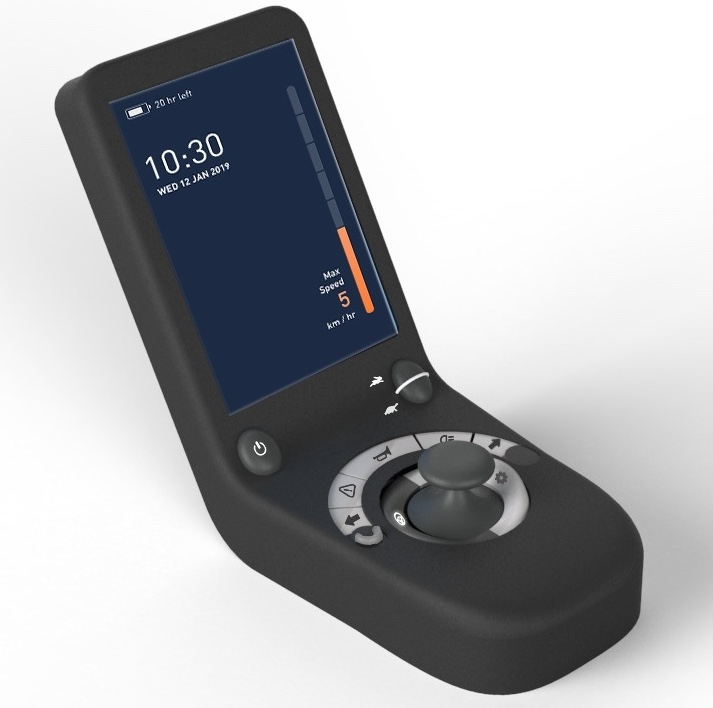
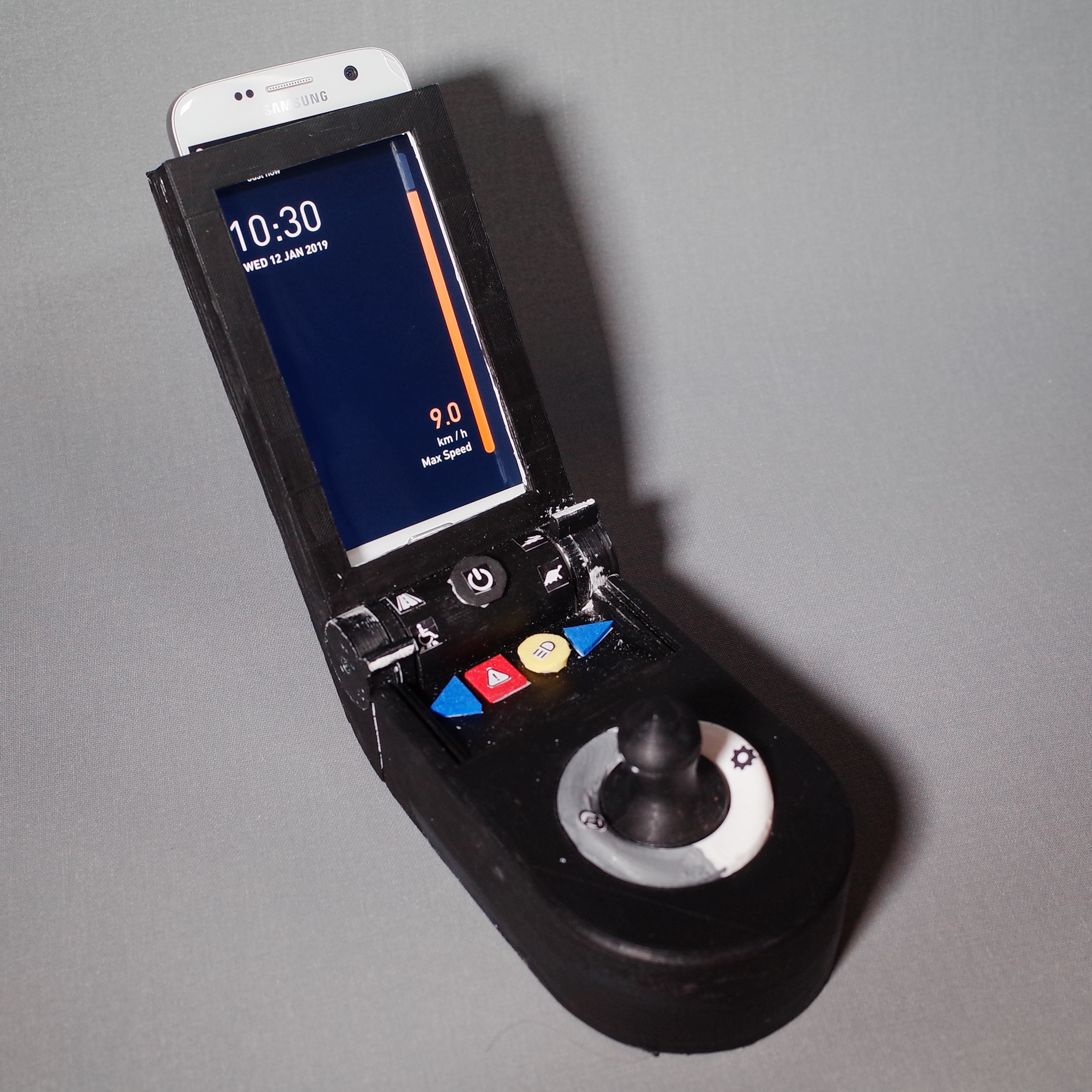
Our design team created a series of prototypes, both physical and digital, to capture the intended experience of the redesigned control interface.
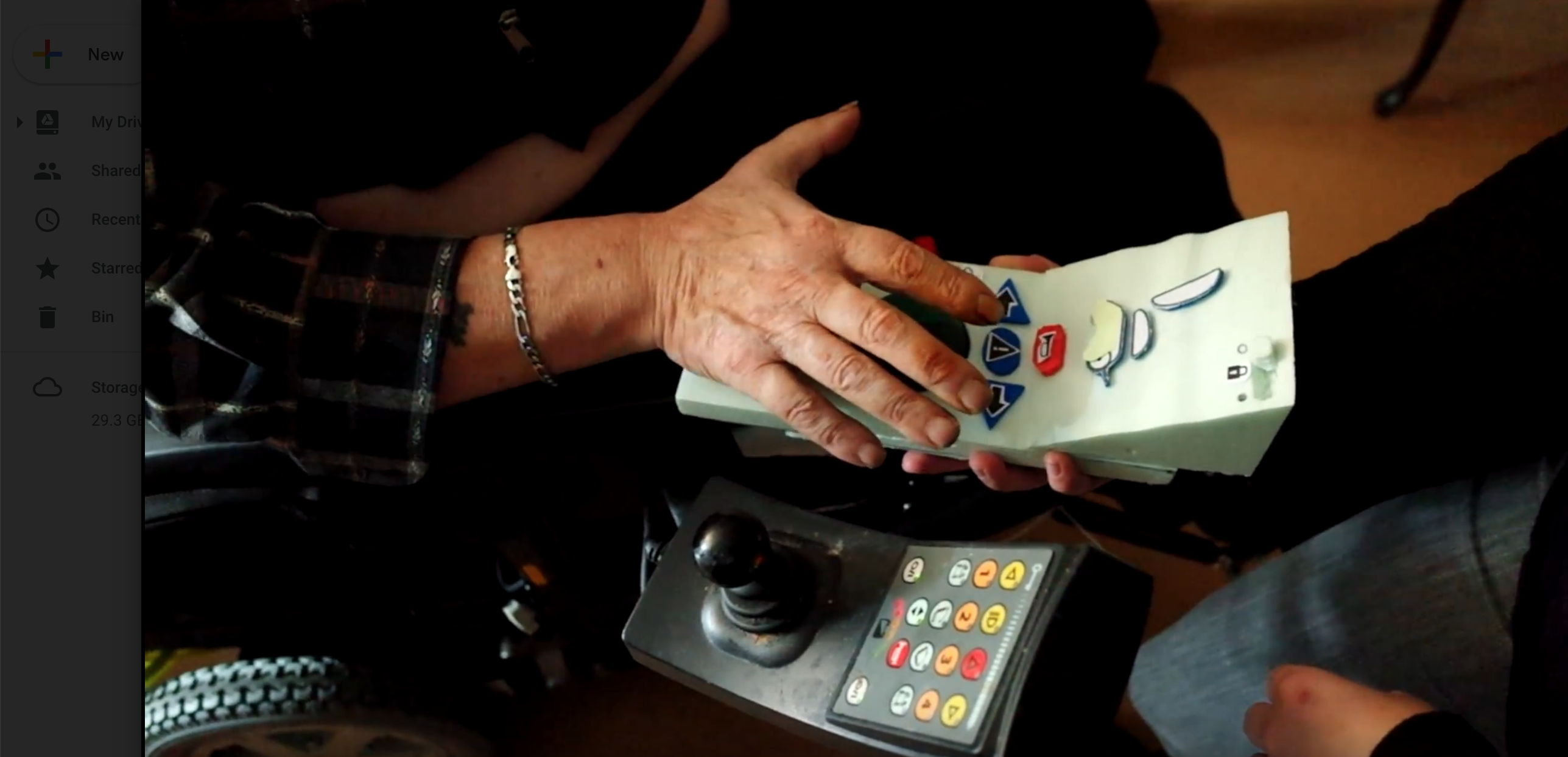
We developed the physical prototype based on ergonomic considerations raised by users, including a simplified icon set, resized joystick, and radial buttons. These changes made the physical interface more accessible for users with limited dexterity or fine motor impairments.
The digital prototype focused on streamlining controls and organising them according to frequency of use and criticality. Menu depths were minimised and button shortcuts were introduced for essential, everyday settings, such as steering parameters and seat position.

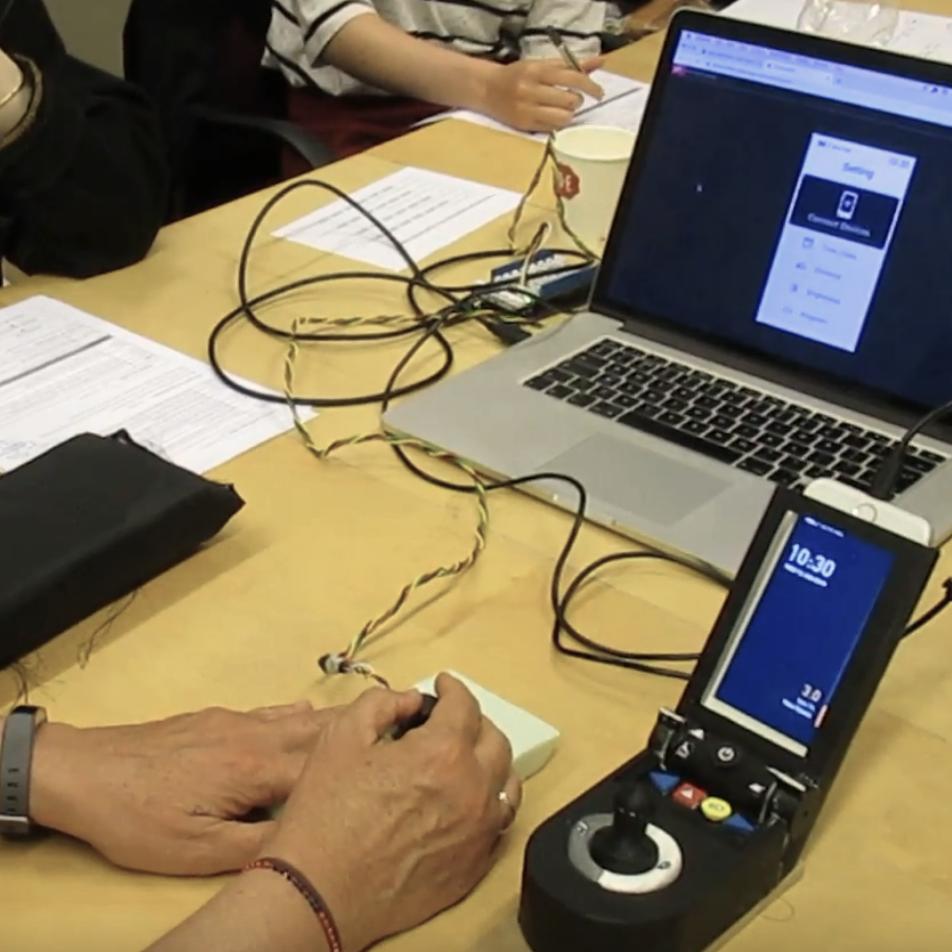
I used Figma, JavaScript and Arduino to connect the physical and digital components and programme their interactions.
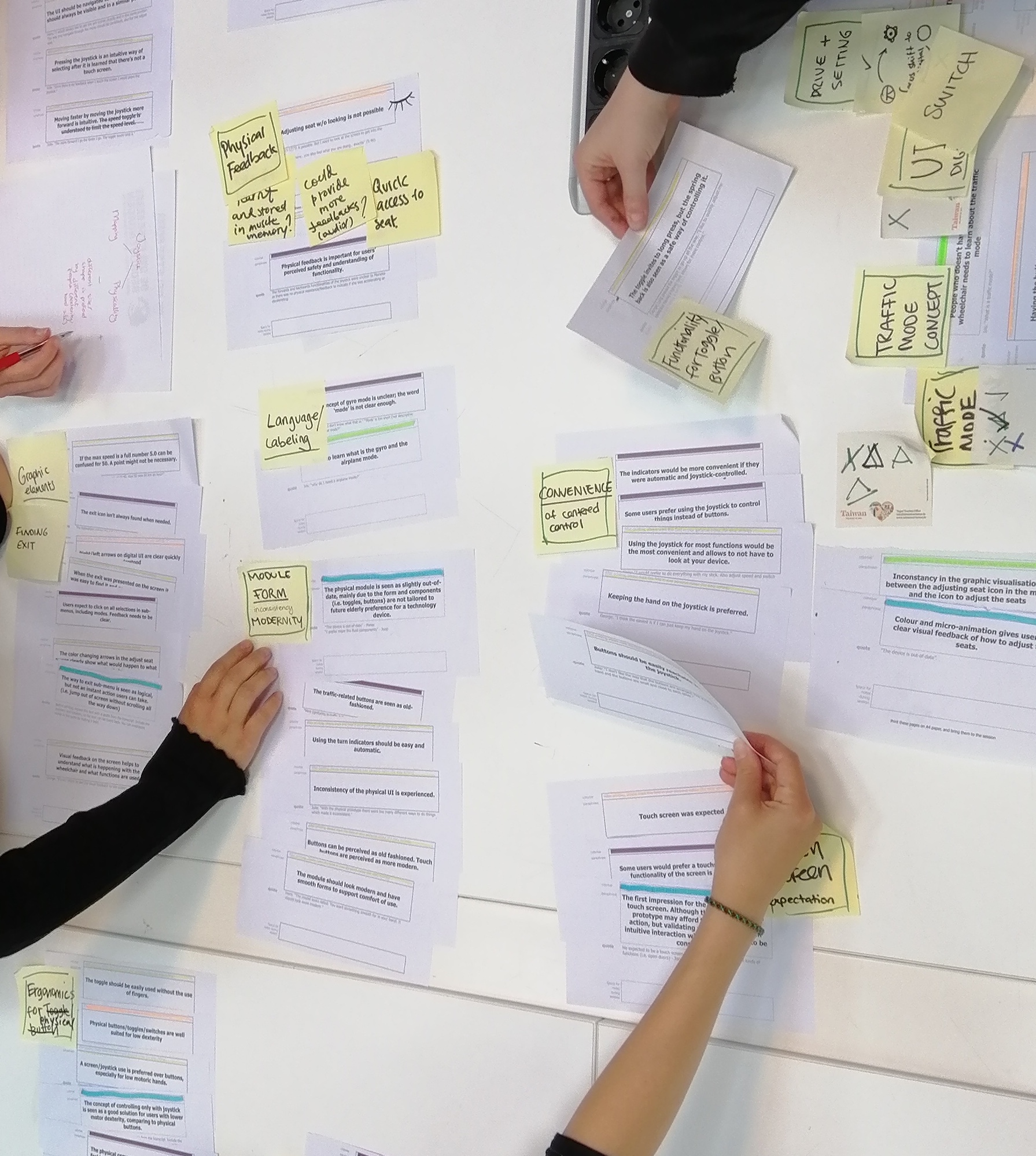
I conducted and analysed a range of stakeholder interviews, including users and care professionals.
Together with the design team, I designed and conducted a series of usability tests with both ergonomics experts and target users.
Snapshots from throughout the design process, including user testing, prototypes and analysis.