During my PhD, I investigated new techniques and principles for UI, UX and interaction design in the coming era of quantum computing. My work focused on the needs of future quantum developers, a growing but under-served user group. Through extensive stakeholder engagement, iterative prototyping and user testing, I developed a validated approach to designing accessible, intuitive interfaces for quantum computers.

I conducted knowledge exchange sessions, co-creation workshops and expert interviews with scientists, educators and policy-makers, identifying tensions, overlaps, and opportunities for design.

Together with educators, engineers and designers, I designed new ways of interacting with quantum computers. I took ownership of the design process from concept sketch to final prototype.

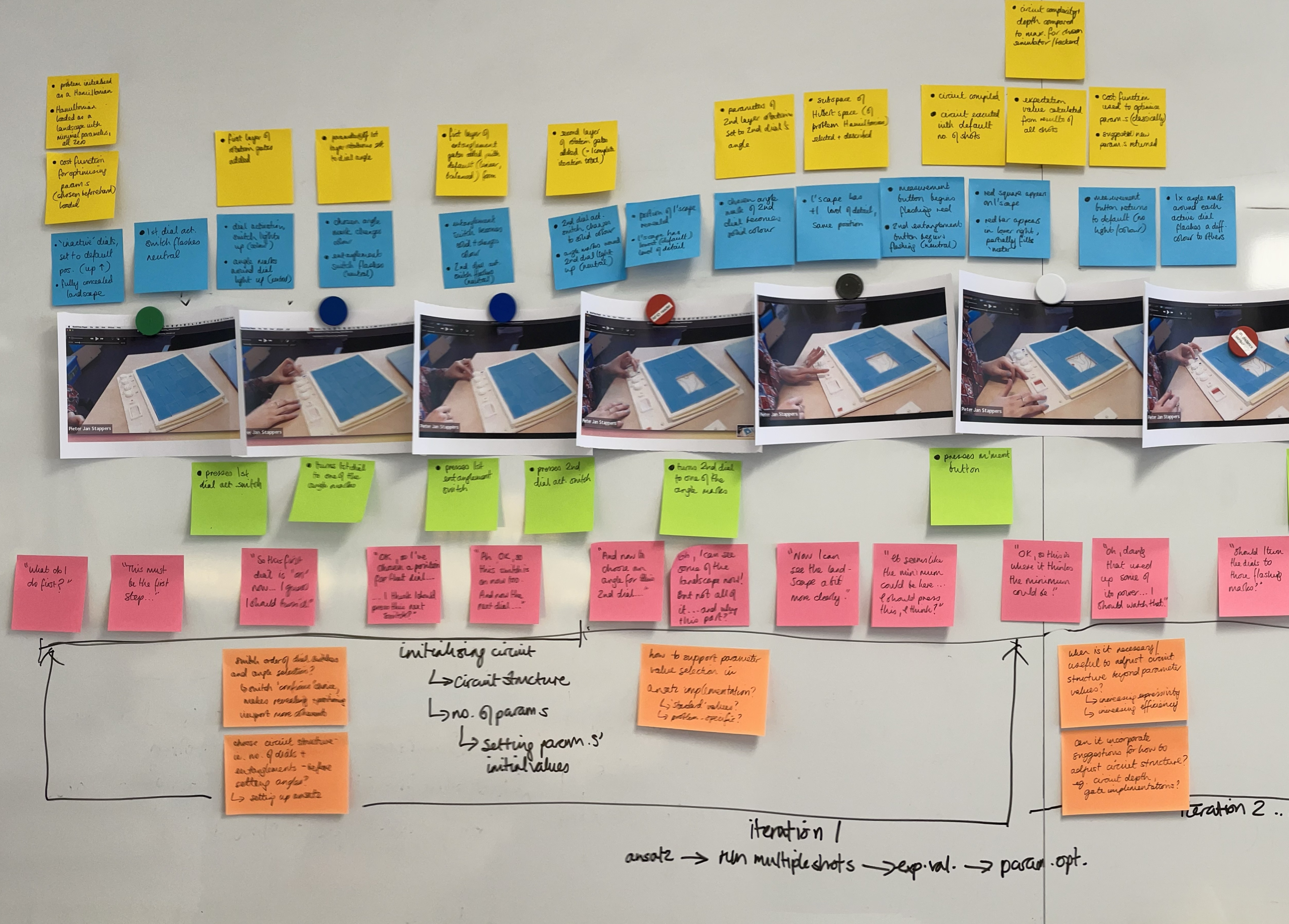
I designed and conducted testing sessions with target users, developing innovative metrics and data collection techniques to find connections between users' behaviours and mental models.
.png)
The project culminated in a design and prototype for an interactive learning experience, geared towards individuals with some computing experience, but no specific experience with quantum computing.
I named the design Think-A-Grid to acknowledge the inspiration I drew from Weisbecker's Think-A-Dot, a 1960s puzzle game for learning the basics of computer memory.
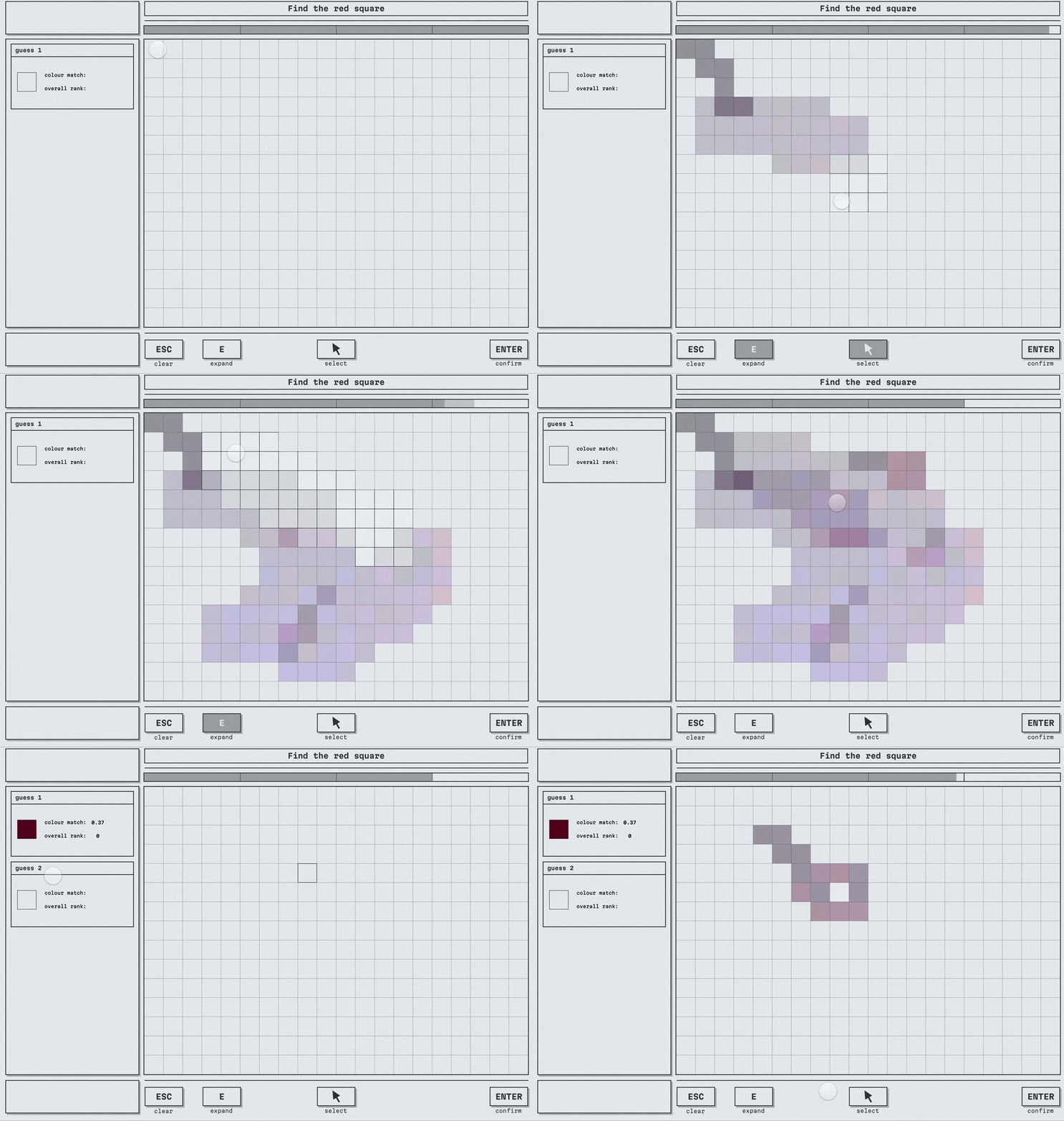
Driven by innovative interface metaphors and inspired by the learning philosophy of Computational Thinking, Think-A-Grid presents quantum mechanical principles as tangible, dynamic components of a problem solving task: to find the square in the grid that is the most red in colour.

I created wireframes and interaction mock-ups in Figma and ProtoPie, later using Mathematica to add data collection capabilities for user testing.
I tested the final design with 10 target learners, using a think-aloud protocol to elicit their thought processes.
Test results showed that the design successfully supported new learners in connecting quantum concepts to computing principles.
I created detailed narrative storyboards to design each step of user interaction and guide my prototyping process.
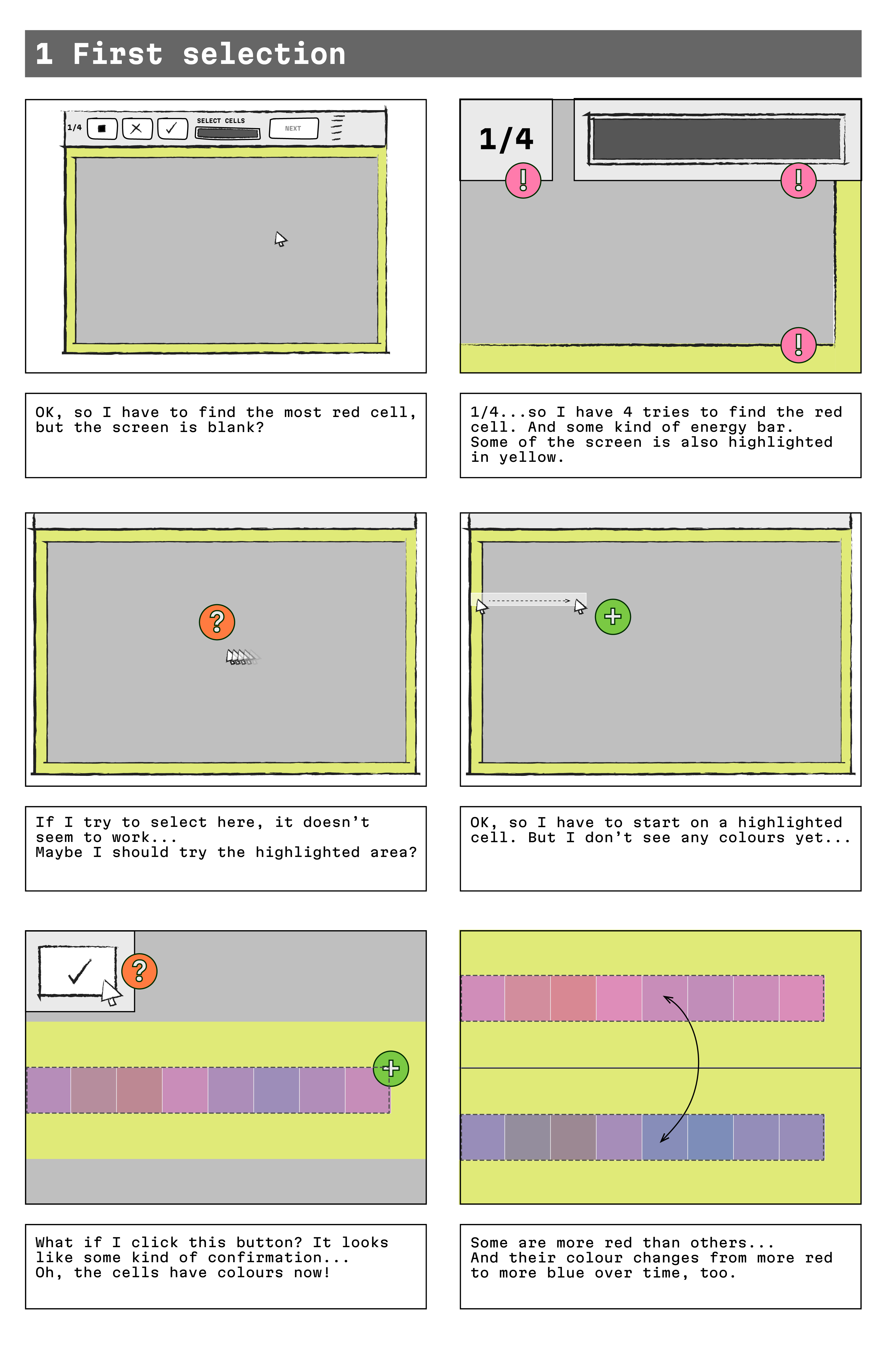
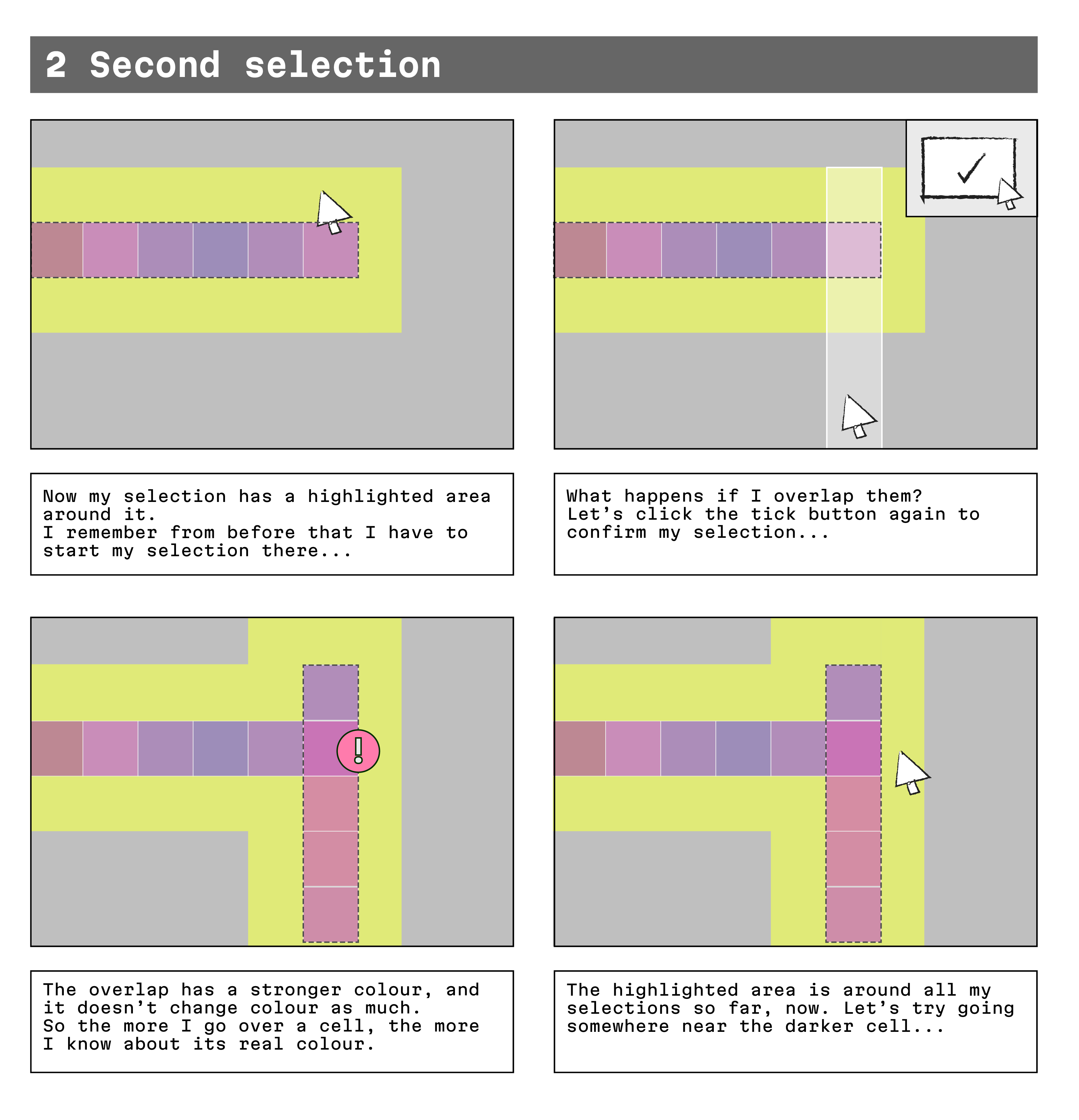
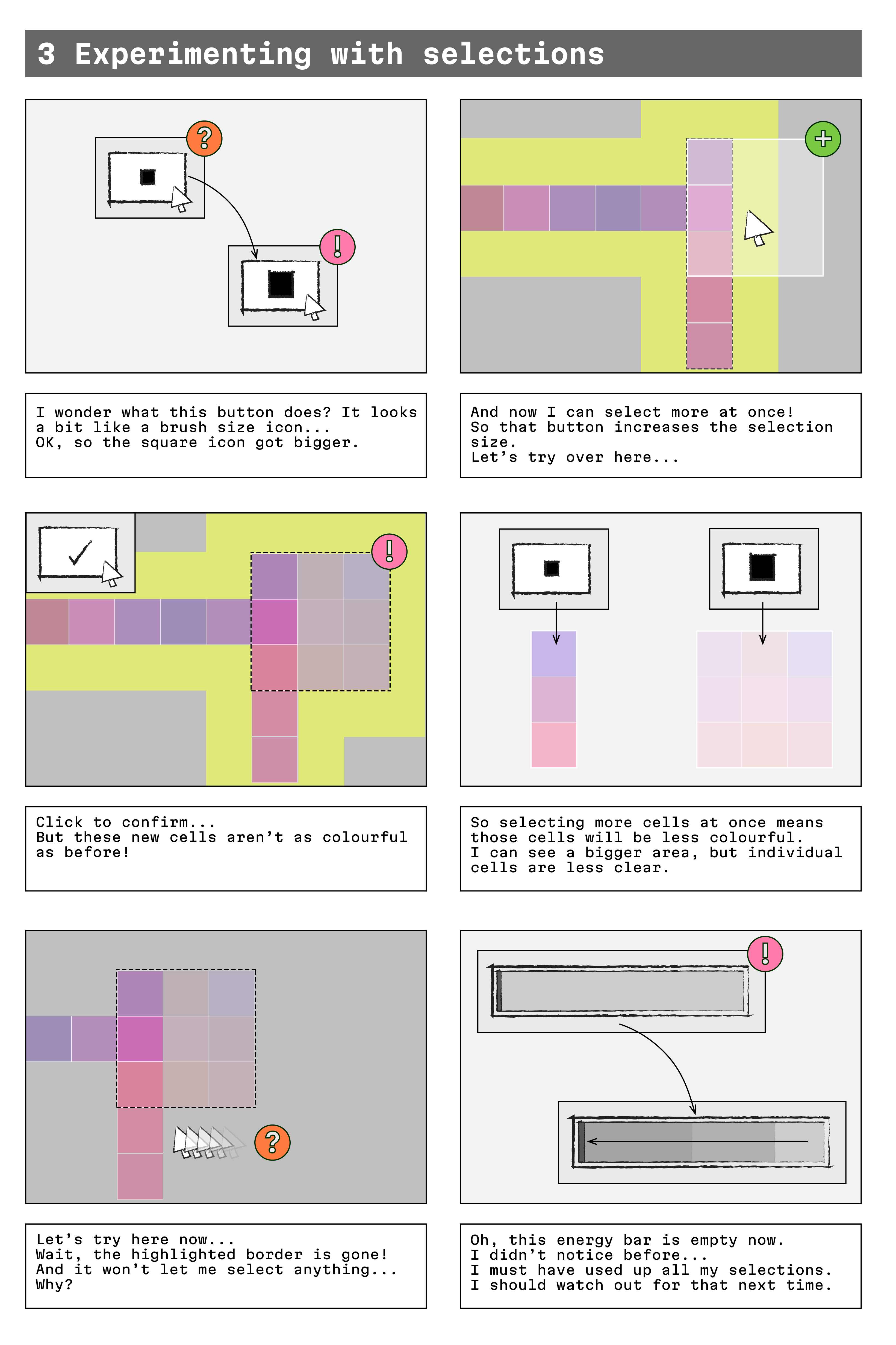
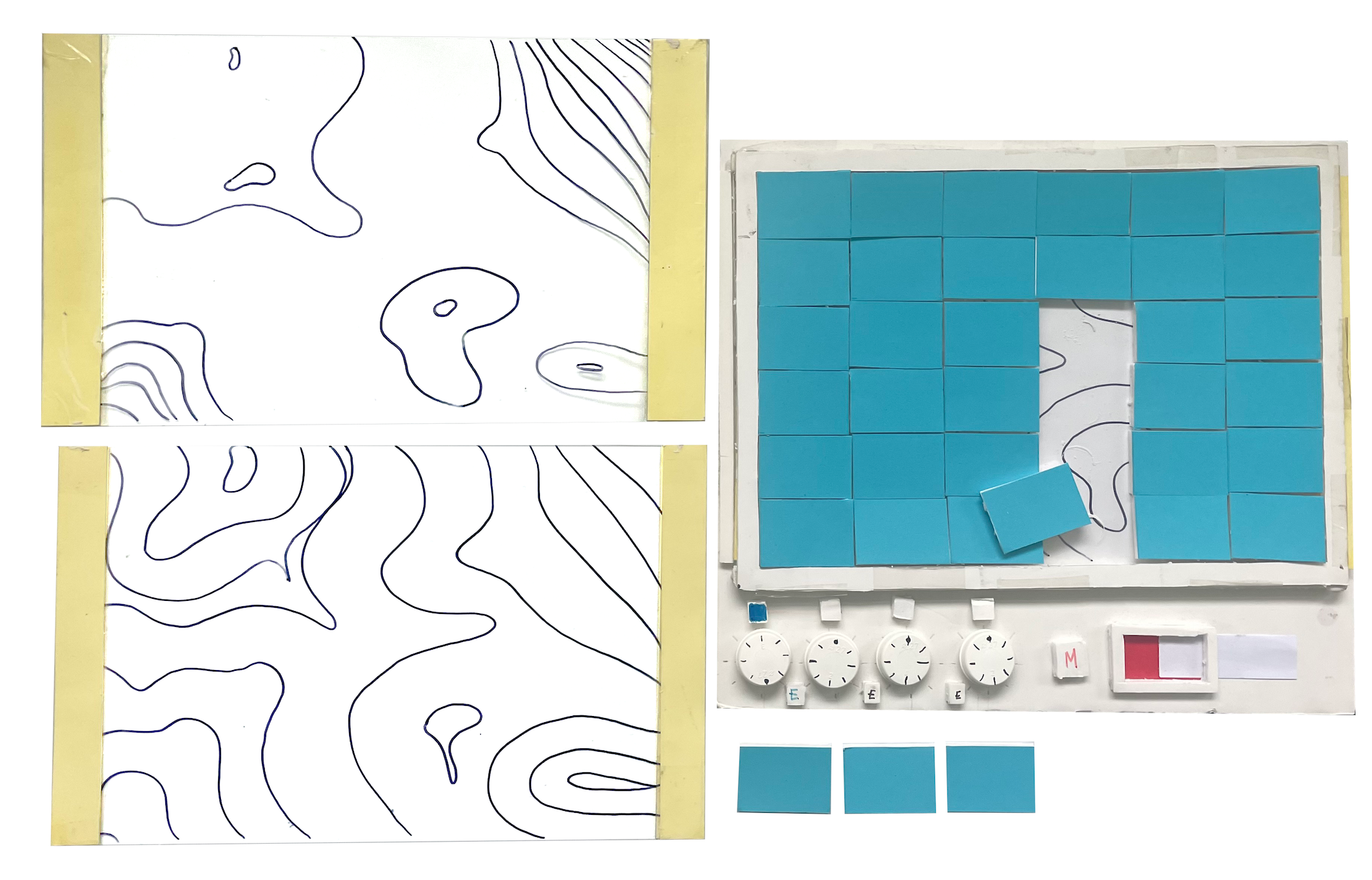
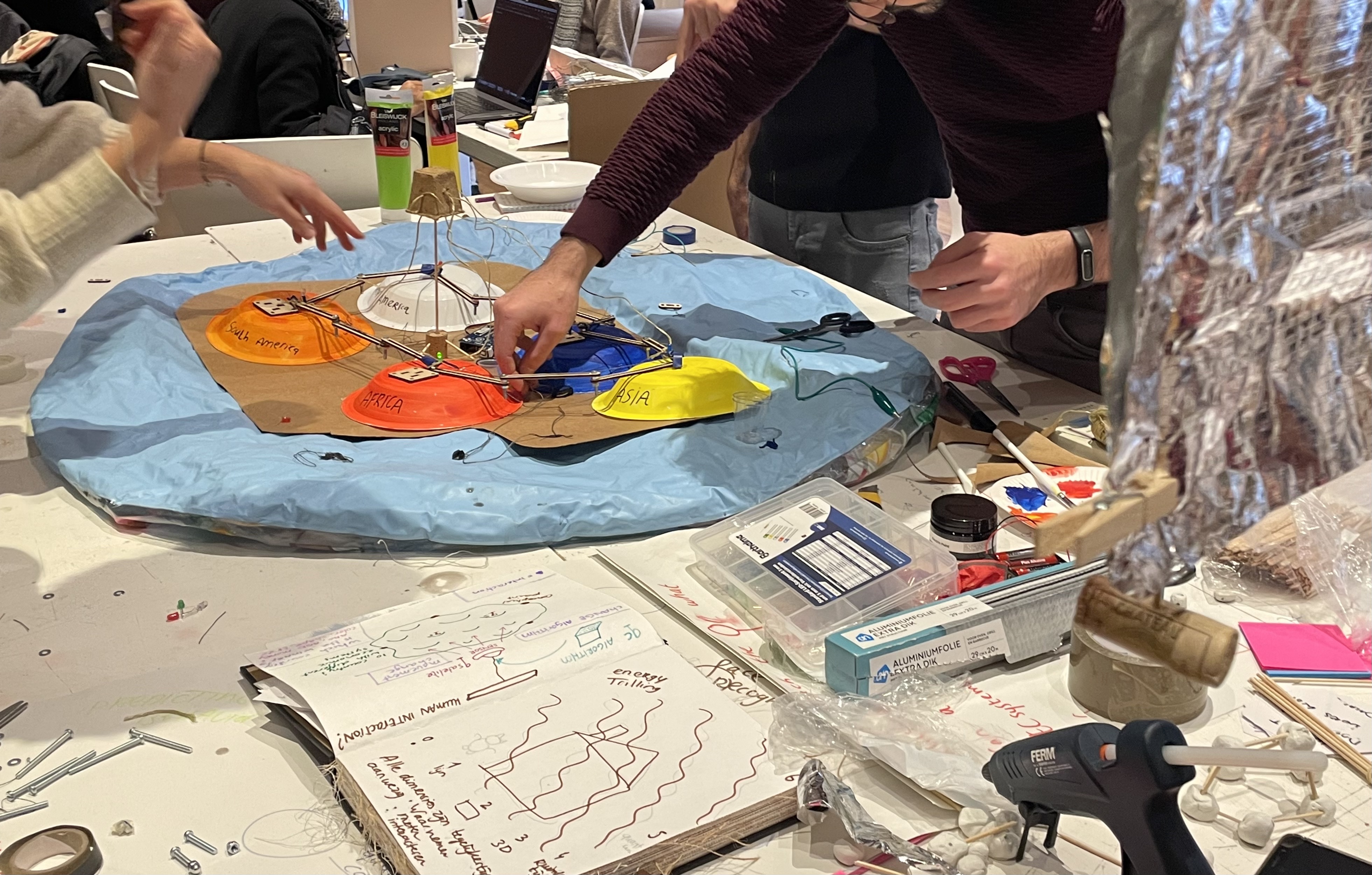
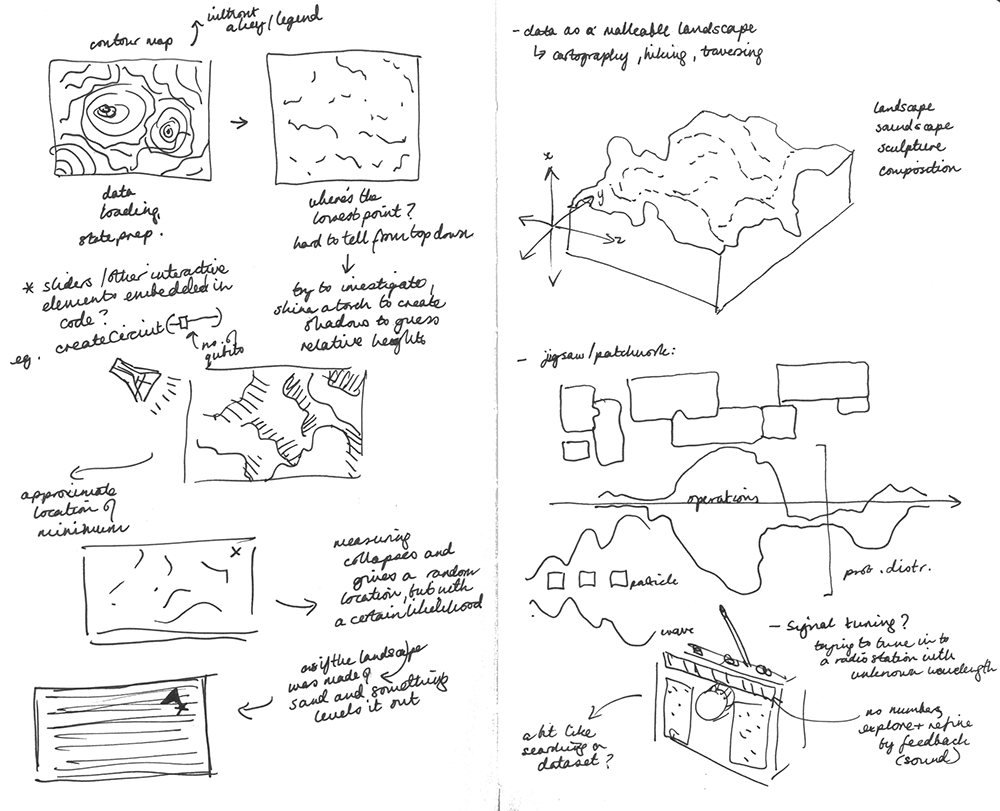
Snapshots from throughout the design process, including co-creation sessions, concept sketches and prototypes.